
Welcome back to Episode 11 of Sound Discussion!
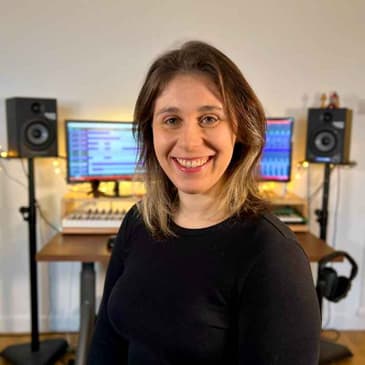
We are back for another chat with a really interesting guest this month. Jo Karelis is a massively talented musician who composes for film, TV, games, podcasts, plays and also releases her own music.
Jo can often be found out and about with her hand held audio recorder capturing sounds and rhythms that she can then use in projects later.
Many features that she has scored are available via Amazon Prime. Her music has been used across the BBC TV network and played on BBC radio, and her work has been mixed in major UK studios such as Warner Brother’s De Lane Lea and Twickenham Film Studios.
In this episode we discuss her process for composing, what it is like working on these projects and so much more.
To learn more about Jo you can use the links below!
Website: https://joannakarselis.com/
Soundcloud: https://soundcloud.com/joanna-karselis
IMDB: https://www.imdb.me/JoannaKarselis
Send us an email and let us know what you thought about this episode: sounddiscussionpodcast@gmail.com
You can find more information here: https://linktr.ee/sounddiscussionpodcast
Hosted on Acast. See acast.com/privacy for more information.
[00:00:00] Amazing. What a great interview. Discussion. Absolutely. I genuinely knew none of that.
[00:00:06] No, that was really an interesting conversation to have. As the listeners will find out here in a few minutes when we go into the show, there's so much that happens in movies that you don't think about the music part of it, right? It just adds that something to the movie.
[00:00:30] And if you were to take the music away, it completely changes the context of the movie. It's something that I could never do, but I love the movie soundtracks and what it does for the film. So to hear a process of how you go about to create it, it doesn't seem as daunting, right?
[00:00:52] Like, she's kind of just like you or I. You know, you sit down with an idea and you just sort of figure it out. And, you know, six to eight hours later, you've got something.
[00:01:04] Yeah. And that whole, the whole conversation about how, how that process works when they get involved, what stage is the film in by then? I found that really interesting. So as you say, they'll find out in a minute.
[00:01:19] And every project is different. It depends. It depends.
[00:01:23] It depends. I think that that's, but I think that that's, that's an appropriate comment. As much as that appeared in the interview, it all really does depend. There's so many variables. And especially when you're working, you're putting, you know, your art into somebody else's art. There's so many things that can happen.
[00:01:43] And so many avenues you can go down and you might find yourself going down a particular road. And, and then the director says, yeah, no, that's, that's not what we were thinking here.
[00:01:53] Hopefully they give you some direction into, you know, getting back on the right path. And maybe sometimes not just, maybe it's just, well, no, this isn't working. Come up with something else.
[00:02:04] It's messy, but art is messy.
[00:02:07] Art, art is messy.
[00:02:08] And if there's just a formula for it.
[00:02:10] It can be painful.
[00:02:11] Yeah, absolutely.
[00:02:11] It can be absolutely painful, especially with, with that sort of fear of rejection or, or that, that possibility of rejection, uh, because it is your baby and to see it cut.
[00:02:22] Hmm.
[00:02:22] That's, that's gotta be rough.
[00:02:24] But anyway, um, let's get on with the show.
[00:02:27] Let's get into it.
[00:02:31] Hi, and welcome to sound discussion.
[00:02:33] Each episode, we discuss a music topic, which we have all had firsthand experience with.
[00:02:38] These will be anything from getting started, recording, playing live, mixing, mastering, and everything in between.
[00:02:46] Most episodes, we will have a special guest to bring their professional experience to the discussion.
[00:02:51] So, let's get started.
[00:02:56] This month, we are thrilled to be joined by a composer, multi-instrumentalist, and storyteller,
[00:03:02] who weaves together unique soundscapes for film, TV, and games.
[00:03:07] Classically trained, they furthered their musical studies by studying the avant-garde styles of musique concrète and electroacoustic,
[00:03:19] with projects spanning across platforms and genres.
[00:03:22] They bring a distinct and evocative approach to composition that truly amplifies the emotional core of each story they work on.
[00:03:33] They have scored projects for Amazon Prime, and their music has been used across the BBC TV network and played on BBC radio.
[00:03:42] On top of that, their work has been mixed in major UK studios, such as Warner Brothers' Delane Lee and Twickenham Film Studios.
[00:03:52] You will have heard their music in indie films, video games, or even podcasts, just like this one.
[00:03:58] Please welcome to the podcast, Joanna Carcellus.
[00:04:02] Hi, Joe.
[00:04:03] Hey, Joe. Great to have you.
[00:04:05] It's so good.
[00:04:07] We love having guests on.
[00:04:09] We love talking to people about stuff that we know nothing about, so brace yourself for the we know nothing about this.
[00:04:15] Because as we point out every episode, we are still winging this, no matter how many years we've been doing it.
[00:04:21] I'm sure you're probably the same.
[00:04:22] I think that's generally the attitude for all musicians, isn't it?
[00:04:25] If you know everything, then you're doing it wrong.
[00:04:28] Yes, definitely.
[00:04:30] That is appropriate advice, actually.
[00:04:33] I'm just dropping the pearls of wisdom early, you know.
[00:04:36] Bam.
[00:04:38] How did you get started, either in music or in what you're doing currently?
[00:04:44] Well, music has always been a really big part of my life.
[00:04:47] My mum studied piano professionally and played, so she definitely had a lot of music going on in the house.
[00:04:53] Classical music was always around.
[00:04:54] But when I was about four years old, I was sitting in nursery, kindergarten, I guess for you guys,
[00:05:00] and someone brought a violin in.
[00:05:02] And I was sitting on that carpet and being like, what is this sound?
[00:05:06] What is that?
[00:05:08] That's what I want to do with my life.
[00:05:09] So I ended up spending my whole teenage years like a massive geek, just sitting in orchestras, playing, practicing.
[00:05:16] That was my life, you know.
[00:05:18] I got to university, decided I wanted to study violin at university.
[00:05:21] That was the goal.
[00:05:23] And I got there and they told me I wasn't very good, actually, despite having spent my whole teenage years studying it.
[00:05:29] They went, no, you're not great.
[00:05:30] Maybe switch to viola, actually, if you want to play professionally, which was a bit of a shock to the system at the time.
[00:05:37] But a few weeks later, I was in a lecture kind of going, what am I going to do with my life?
[00:05:42] You know, I've spent all this time studying violin and now I've been told I'm rubbish.
[00:05:45] Oh, no.
[00:05:46] And they played a piece of music by a composer called John Adams called Harmonium, Negative Love, so classical music.
[00:05:52] And it just blew my mind that music could sound like that.
[00:05:56] I had never heard anything like it.
[00:05:58] These kind of huge waves of instrumental colour coming and crashing over us.
[00:06:02] And I just changed my life.
[00:06:04] So from that moment on, I was like, that is what I want to do.
[00:06:07] I want to make music that feels like that inside.
[00:06:10] So I kind of, yeah, I've gone from there, really.
[00:06:12] I kind of stumbled into film music a few years later after my master's.
[00:06:16] But that was really the point of me becoming a composer rather than a performer, I guess.
[00:06:22] Wow.
[00:06:24] There's, that's really interesting.
[00:06:25] And boy, your story sounds very similar to mine coming up because I started playing violin when I was three.
[00:06:34] Oh, cool.
[00:06:34] So like around kindergarten, right?
[00:06:37] Yeah, yeah.
[00:06:38] Although I guess you could say that I started learning the concepts at about three.
[00:06:43] I don't think I started playing until I was about four.
[00:06:45] You know, let's be real here.
[00:06:47] What three-year-old can play the violin?
[00:06:49] But yeah, I've been studying it.
[00:06:51] You know, I had been studying it my entire life.
[00:06:54] And then I got to college.
[00:06:55] I played in orchestras in high school and middle school.
[00:06:57] I did the whole thing year over year over year.
[00:07:01] And I get to college.
[00:07:02] And of course, I'm a violin performance major.
[00:07:06] That's my goal, right?
[00:07:08] And I've been doing orchestras my entire life.
[00:07:11] Here we go.
[00:07:12] College orchestra.
[00:07:13] Holy shit.
[00:07:14] That's a different level of playing.
[00:07:16] Like, I was not prepared for that.
[00:07:18] And after one semester, I didn't have anyone tell me that I wasn't good.
[00:07:22] I didn't need anyone to tell me that I wasn't good.
[00:07:24] I knew I wasn't good because I sat in the back of the orchestra and I said, I'm not very good at this.
[00:07:28] So I'm going to go do something else.
[00:07:31] So I dropped my violin and put it aside and went on, you know, and done, did some other things.
[00:07:38] But I picked it back up about 15 years ago now.
[00:07:43] And I enjoy it more than I ever did growing up.
[00:07:45] So, you know, don't let anyone ever tell you that you're not good at something.
[00:07:50] That's so cool to hear that you had such a similar story in so many ways there.
[00:07:54] And I think that's a really good point.
[00:07:56] We come back to things later in life after we've been kind of, we've lost the love of them professionally, possibly.
[00:08:01] And we find more enjoyment and more pleasure in playing them for ourselves in our own ways, right?
[00:08:06] Than we ever did probably sitting in an orchestra.
[00:08:08] There's something really special about sitting in an orchestra and performing.
[00:08:10] I don't know if you'd agree, but for me, it's very unique.
[00:08:13] But there's also something different about coming to it for yourself and just playing for yourself without that pressure.
[00:08:19] Really freeing.
[00:08:21] Totally.
[00:08:22] Absolutely.
[00:08:23] There's a lot of pressure when you're playing in a group like that because you might think you can hide, you know, but you can't.
[00:08:30] And, you know, if you're not playing in lockstep with everyone else and doing the parts correctly, it is, you stick out like a sore thumb and it is humiliating and embarrassing and torturous.
[00:08:43] Yeah.
[00:08:43] Yeah.
[00:08:44] I have massive respect for people that play in orchestras professionally because it is not easy.
[00:08:50] Absolutely not.
[00:08:50] And it takes dedication.
[00:08:53] And that's something that I just didn't have at that age.
[00:08:55] And yeah.
[00:08:57] Anyway, sorry, not to derail your story, but I had to jump in with that because it was like, that is my story.
[00:09:03] Yeah.
[00:09:04] You're right.
[00:09:04] It's so much pressure, isn't it?
[00:09:05] I had a nightmare once about doing the bowing wrong in Tchaikovsky's Romeo and Juliet, like genuinely waking up in sweats because I was so worried about messing up and looking down the whole orchestra, you know, like this stupid bowing passage.
[00:09:17] So, yeah, it's definitely a lot of pressure on young, young orchestral musicians.
[00:09:20] It's hard.
[00:09:21] And we don't talk about it.
[00:09:23] Yeah.
[00:09:23] Sorry, Ben.
[00:09:24] I was going to say, I think orchestras are something that we should definitely cover in an episode because so when I was when I was young, I played in in youth orchestra, played drums for I was there a couple of years.
[00:09:37] And I think they are no matter what you want to do in music, if that's what you want to do, they are an unbelievably good foundation to start from.
[00:09:48] As a drummer.
[00:09:50] Learning to read drum music, that's great.
[00:09:52] Learning when not to play, which is what you do in an orchestra more than when to play, sets you up with such an incredible foundation for how drums become musical instead of just rhythmic instruments.
[00:10:06] And I'm sure with violins, you know, same, you've got parts where you don't play because there's no part room for there.
[00:10:12] And it's learning to just sit and not be involved is such a structured beginning for anyone who wants to learn music, whether they're going to write their own music or play in a pop band or, you know, just pay covers at the pub is.
[00:10:27] I think we should cover it as an episode at some point.
[00:10:30] That foundation.
[00:10:32] Do we know this?
[00:10:33] And I'll see what I can.
[00:10:34] I played trumpet in band.
[00:10:36] I was also in the marching band.
[00:10:39] Not dissimilar.
[00:10:40] Yeah, no.
[00:10:41] Classical music.
[00:10:42] And we just didn't have the violins and the violas and any of the stringed instruments.
[00:10:47] And you had to march while doing it.
[00:10:49] Yeah, well, there was that too.
[00:10:51] Well, I've been in band since like fourth grade.
[00:10:54] And then in ninth grade, we did marching band.
[00:10:58] So I was sitting down.
[00:11:00] Yeah.
[00:11:01] And then also marching.
[00:11:02] Which is a completely different.
[00:11:04] So you were in symphonic band and then marching band.
[00:11:06] Yeah.
[00:11:07] They called it band, but there was no strings.
[00:11:11] They had orchestra and they had band.
[00:11:14] And band was just, you know, trumpets, flutes, viola, not viola, clarinets, saxophones.
[00:11:22] And brass instruments.
[00:11:23] And brass instruments.
[00:11:24] Yeah.
[00:11:25] Is it easy to walk and play at the same time?
[00:11:27] Because I don't think I've got the hand-eye coordination for that.
[00:11:29] No, that was hard.
[00:11:29] They actually had to, they teach you how to step so that you're not when you play, you know?
[00:11:36] So, and also, man, holding up a trumpet, 10 degrees was the angle you had to have it at.
[00:11:43] And by the time, by the end of the show, by the third song, your arms hurt.
[00:11:49] Imagine.
[00:11:51] The trumpet isn't that heavy.
[00:11:53] I actually played with a cornet, so it was a little heavier.
[00:11:58] But it's not that heavy.
[00:12:00] But at the end of that show, that was heavy.
[00:12:03] Your arms, oh, man, I've got to work out that.
[00:12:07] You should do an episode about how you can play.
[00:12:08] I listen to that.
[00:12:09] That sounds great.
[00:12:10] All right.
[00:12:11] So you played in an orchestra.
[00:12:13] You had this discovery, this epiphany of, you know, composing.
[00:12:20] You wanted to make this music that made you feel this way, which is an incredibly mature thing to identify at that age.
[00:12:28] So tell us about that process after you discovered you want to make that kind of music.
[00:12:34] Tell us about that process and finding your way into that world.
[00:12:38] Yeah, well, it was a lot of learning very quickly.
[00:12:40] I'd gone in, say, machine day playing to play a violin major.
[00:12:43] So I kind of had to then realign my priorities.
[00:12:45] I still did major in violin performance practice, actually, romantic performance practice specifically.
[00:12:49] But I also kind of co-majored it with instrumental composition.
[00:12:54] So I ended up doing three.
[00:12:55] I was lucky.
[00:12:56] The university I was at had a really comprehensive undergraduate scoring program and composition program.
[00:13:03] So I studied with some great composers for a few years about how to write for instruments and learn all those skills.
[00:13:09] And that was a really good process for me.
[00:13:11] I got into my undergraduate and decided I hadn't learned enough.
[00:13:15] So I decided I was going to do a master's in electroacoustic and musique concrète music, as Neil described in my introduction there.
[00:13:22] It's weird hearing your website being read out loud.
[00:13:24] I'm not sure.
[00:13:25] Maybe you could get back and reword some of that.
[00:13:28] So, yeah, I went back and studied.
[00:13:29] And so those are two very obscure areas of contemporary classical music, which I should probably unpack a little bit.
[00:13:36] So electroacoustic music is computer music.
[00:13:38] And musique concrète is really related to it.
[00:13:40] It's this idea of making sound and music out of the everyday.
[00:13:45] So, for example, one of the professors I studied with, a very famous composer, he wrote a piece called Clang in the 60s.
[00:13:52] And that was for colander.
[00:13:54] And he sampled the colander and manipulated it using these very genre-specific techniques to create clang.
[00:13:59] So these kinds of techniques that really challenge how you hear the world, I think.
[00:14:07] It's kind of the transmutation of everyday objects into music, into sound.
[00:14:11] It's a French parlour tradition.
[00:14:13] It goes back to ancient Greek times.
[00:14:15] There's a whole load of stuff I won't bore you all with about it.
[00:14:17] But it's an interesting tradition and an interesting attitude to sound and music in general, I think.
[00:14:22] So I went on to study that and particularly looking at how to combine it with instrumental textures and timbres.
[00:14:28] That was really my passion.
[00:14:29] Like the timbre of a sound.
[00:14:32] Like what does the sound feel like as much as how the sound is constructed, if that makes sense.
[00:14:37] As much as kind of thinking about melody and all the other components, like the actual texture is what really attracts me to a sound probably from those roots.
[00:14:45] And so, yeah, I went and did that for a few years.
[00:14:49] And honestly, by the end of it, I was a little bit burnt out with classical music.
[00:14:52] I wasn't loving it at that point for a few different reasons.
[00:14:57] And I got the opportunity to score a play, my first theatre job.
[00:15:01] And that just, again, it's these kind of like Damascus Road kind of moments, you know, the light shines and you're like, ah, this is what I'm meant to do.
[00:15:09] Because it was so different to anything I'd done before.
[00:15:12] It was a pretty much an all female production team on that one, which made a big difference.
[00:15:16] I think it was very collaborative.
[00:15:18] It was very open.
[00:15:20] I was able to kind of use all my weird geeky skills and put them together with the visual environment and with the performers and to collaborate.
[00:15:27] And it just it just blew my mind that I could write music for a play that would make such a big difference to the way people perceived it.
[00:15:35] But the way the drama and the narrative were constructed really just made me go, that's what I want to do.
[00:15:41] That's it.
[00:15:42] And then a few weeks after that finished, actually, just out of the blue, I got lucky.
[00:15:47] I got so lucky.
[00:15:48] I got a message in my SoundCloud inbox of all things going, hi, I'm a director.
[00:15:52] Do you want to score my film?
[00:15:54] That sounds very dodgy, doesn't it?
[00:15:56] But it turned out to be one of the most fortuitous things that ever happened to me.
[00:16:01] The film won those awards.
[00:16:03] It's on Prime now.
[00:16:03] Well, it's still touring globally.
[00:16:05] It's probably one of the pieces of work I'm most proud of, actually, still.
[00:16:09] And that really kickstarted my film career and made me go, oh, wow.
[00:16:14] OK, so that experience I had in drama, I can do it with film as well.
[00:16:18] And more than that, it can go globally.
[00:16:21] People can find themselves in this story from around the world and it can relate to people all over the place.
[00:16:25] How amazing is that?
[00:16:27] So that's how I kind of moved from classical into the more media world.
[00:16:33] Cool.
[00:16:34] So what's the name of the film?
[00:16:35] Oh, it's called Reunification.
[00:16:37] It's about the reunification of China and Hong Kong and about the director's autobiographical experience.
[00:16:43] Can I say that again?
[00:16:43] Sorry.
[00:16:45] Autobiographical experiences with half his family remaining in Hong Kong and the other half going to America, to New York.
[00:16:51] So it's a very powerful piece of filmmaking about culture and identity and international family, really.
[00:16:58] Very, very proud of the film.
[00:17:01] Very cool.
[00:17:02] Very cool.
[00:17:02] Have to check that out.
[00:17:03] Absolutely.
[00:17:04] Absolutely.
[00:17:05] Yeah, we'll post a link to that.
[00:17:07] Yeah.
[00:17:07] Yeah.
[00:17:08] Yeah.
[00:17:08] If you email me a link, we'll put it in the show notes and all that sort of thing.
[00:17:14] It amazes me how many times we talk to people, whether it's yourself or Warren Hewitt or whoever it is, that just the most random things are the start of that journey.
[00:17:26] And, you know, it's like everyone says, oh, you know, what was your plan?
[00:17:29] What was your plan to get into this?
[00:17:30] And it's like the number of times it's like there's no plan.
[00:17:33] These things just, they happen.
[00:17:36] It just happens.
[00:17:36] Yeah.
[00:17:37] It's the sort of like crossing of chance and just putting yourself in the right position.
[00:17:42] And a SoundCloud message.
[00:17:44] Yeah, right.
[00:17:45] Exactly.
[00:17:46] Who would have thought?
[00:17:47] Who would have thought?
[00:17:49] How much do you still find time to write for yourself?
[00:17:52] Because obviously you're a singer-songwriter as well.
[00:17:55] How do you find the balance between being able to work on things for yourself and being able to work on films or games and that kind of thing?
[00:18:04] I mean, honestly, it's quite hard.
[00:18:06] I did two back-to-back features over the summer for the first time.
[00:18:08] I've never done back-to-backs before.
[00:18:10] And it was brutal.
[00:18:12] It was brutal.
[00:18:12] I mean, I barely had time to do anything but sit and write music for several months.
[00:18:16] I wrote something like 100, 120 minutes of music in 12 weeks.
[00:18:23] You know, that's not normal.
[00:18:26] And I would never do it again, frankly.
[00:18:30] But at that time, I had no artistic energy at all for anything for myself.
[00:18:34] But at the moment, I'm waiting for something to come in.
[00:18:38] So right now, I've got a bit of downtime.
[00:18:40] And that means that I'm able to get back to my album, something that I haven't had a chance to work on for several months at this point.
[00:18:46] And start to, yeah, find the power in that again.
[00:18:49] And that's exciting because it's kind of like one for that side of my career and then one for this side of my career.
[00:18:55] You know, I can kind of balance it out with something that pays a day job, kind of, you know, pays my rent.
[00:19:01] And then having the album, which I did get a record deal last year.
[00:19:05] But again, to be completely transparent, I think it's important.
[00:19:07] I got a record deal.
[00:19:09] It was very exciting.
[00:19:10] And then the label went under last year.
[00:19:12] So now I've got a nearly finished album and no label.
[00:19:15] So it's kind of you've got to find the balance in it all, haven't you?
[00:19:19] And kind of go, well, this will hopefully be something at some point.
[00:19:23] But right now, I've got to kind of do it in my free time.
[00:19:26] And it's definitely a balancing act.
[00:19:27] You have to kind of juggle your priorities.
[00:19:29] You have to make space for things.
[00:19:31] I know that I like to carve out little pockets of time as and when I can.
[00:19:36] Even when things are really busy, I will try to find half an hour here or there as much as possible
[00:19:41] to do something just for me.
[00:19:43] Earlier today, I just spent five minutes making stupid noises on my Volker drum just because
[00:19:49] it was fun and I like the sounds.
[00:19:51] And maybe that will become something useful and maybe it won't.
[00:19:53] But if we have these curious minds, I think we can find little pockets of creativity in
[00:19:58] the day.
[00:19:58] And that keeps it fresh between balancing all of the different demands on our time at any
[00:20:03] given moment, I think.
[00:20:04] I really like that idea of keeping a curious mind and allowing yourself to go there.
[00:20:11] Because I know everybody has responsibilities and things that they need to get done, whether
[00:20:17] or not it's in music.
[00:20:19] But as a musician or as a music creative, let's say, allowing yourself that time to not have
[00:20:32] deadlines, to not have requirements and just play with something and make some noise and
[00:20:38] appease that part of your brain.
[00:20:40] Oh, I like those sounds.
[00:20:41] Those are cool.
[00:20:42] That's doing something for me.
[00:20:43] That's really important.
[00:20:45] And a lot of times as adults, we forget that.
[00:20:47] I watch my kids play and I watch my daughter make noises with things.
[00:20:52] And she's just going after those noises that make her laugh and smile and giggle.
[00:20:59] And it makes me smile because I'm like, I can't remember the last time I did that for myself.
[00:21:06] You know?
[00:21:06] Like sit down with my guitar and just play something.
[00:21:12] Right?
[00:21:12] And just for the enjoyment, not because I need to come up with something or record something.
[00:21:19] Anyway, yeah.
[00:21:20] Yeah.
[00:21:21] I think that that's a really good thing to keep in mind for anyone in this area is to
[00:21:25] keep that creativity going and just allow yourself that time to explore.
[00:21:29] Yeah, absolutely.
[00:21:30] And just to not be too linear about what you call music as well.
[00:21:34] I keep a task I'm in my backpack at all times.
[00:21:36] If I find a sound that I think is interesting, I can catch it.
[00:21:39] You know, sound is a fleeting thing.
[00:21:40] Music is a fleeting thing.
[00:21:42] And if we find a sound that interests us, we need to grab it.
[00:21:45] You know?
[00:21:46] I've done that many times with my phone.
[00:21:48] I'll be somewhere and I hear an ambient noise and I just want to try and capture it.
[00:21:53] You know?
[00:21:54] Even though like I might listen to it later and A, say like, what the hell is this?
[00:21:59] And or B, it doesn't sound anything like it does in person.
[00:22:03] But just capturing that moment feels important.
[00:22:08] And you know, yeah, the right thing to do.
[00:22:10] It's your curiosity.
[00:22:11] It's your open-mindedness to sound a music interplaying and just not being too
[00:22:15] linear about what you call sound.
[00:22:16] That's really cool.
[00:22:17] I love that.
[00:22:19] Yeah.
[00:22:20] No, it's very good.
[00:22:21] What have you composed for video games?
[00:22:26] And what is the process for that?
[00:22:28] Because my thinking is like, I've always wondered that.
[00:22:32] Because if you've got a character that's just standing around in a video game
[00:22:36] and you walk away, well, the music's still going.
[00:22:39] Is it on like a loop or something per scene?
[00:22:42] Or these are things that I think of when I'm playing a video game.
[00:22:46] It's like, oh, how's the music?
[00:22:48] Is it looped through?
[00:22:49] Does it end?
[00:22:50] And does it restart?
[00:22:52] Is there specific scenes and stuff like that that you're just, you're writing
[00:22:57] music for?
[00:22:58] Is it only for like cut scenes or is it like for the actual, like as the
[00:23:02] characters walking around?
[00:23:03] That's a great question.
[00:23:05] I mean, yeah, characters, I think they what?
[00:23:07] They have their own theme songs or their own sort of like sounds.
[00:23:10] Or melodies, right?
[00:23:11] Right.
[00:23:11] And then that might change depending on their setting.
[00:23:15] And then what other characters come into this.
[00:23:18] Yeah.
[00:23:18] Anyway, you take it.
[00:23:20] Gosh, this is a lot of questions in a very short space of time.
[00:23:23] I'm not joking.
[00:23:23] Sorry.
[00:23:25] Welcome to the podcast.
[00:23:26] Okay, cool.
[00:23:27] I'm sorry.
[00:23:28] Easing me in.
[00:23:29] Right.
[00:23:29] Okay, cool.
[00:23:30] I'll see what I can do.
[00:23:32] So game scoring.
[00:23:33] I've only done two games, so I can't speak on it with any kind of massive
[00:23:37] authority.
[00:23:37] Two small indie games.
[00:23:38] It's not like I've done loads and loads of work in this sphere, but games
[00:23:42] audio is very different to how you would work in film for sure.
[00:23:45] Yeah.
[00:23:46] So we're thinking about whether a media, whether it's film game or something
[00:23:51] else is linear.
[00:23:52] So it can only be experienced in one direction or non-linear.
[00:23:56] So interactive, you know, you can experience it in multiple different ways.
[00:23:59] Right.
[00:24:00] Game music is different because it's non-linear.
[00:24:02] Like you say, you can just leave a character standing there for 10 minutes.
[00:24:06] And what does the music do in that instance?
[00:24:09] Well, it changes, to be honest.
[00:24:10] Sometimes some games decide that they would have the music fade out, almost like
[00:24:14] they want to prompt the player to come back and interact.
[00:24:16] Like, oh no, where did the music go?
[00:24:17] Sometimes they will just loop it.
[00:24:19] The way that music gets into games is quite different to how you put it into a
[00:24:23] film.
[00:24:23] You use what's called audio middleware.
[00:24:26] So the two most common ones are F mod or W wise.
[00:24:30] And you use those to implement the music and the sound into the game together.
[00:24:34] So looping is a really big part of that.
[00:24:36] Yeah, you're not wrong.
[00:24:37] Absolutely.
[00:24:38] Loops are important, but loops can get a bit boring.
[00:24:41] So there are other ways to kind of vary things within the loops.
[00:24:44] Like you might do a few different layers of say the melody where it changes
[00:24:48] slightly, like maybe the syncopation, you know, alters up or you change a note here
[00:24:53] or there, the percussion loops, for example, you may just put a few extra beats in
[00:24:57] or not, but you know, you might do a little, sorry, let me try that again.
[00:25:01] You might put some extra semiquavers in on one part on the MIDI, if you're working
[00:25:04] with MIDI, or you might, yeah, do a little drum break, or you might have layers
[00:25:09] that are able to come in and out and be muted at different points to add the
[00:25:13] variety.
[00:25:14] There's a whole bunch of different ways you can create interactive music that isn't
[00:25:18] stagnant, but it takes a bit of creativity and you have to understand the
[00:25:22] software to implement it properly in order to be able to do it in a way that makes sense.
[00:25:26] So it's a really great way to compose.
[00:25:28] And I would really recommend anyone interested in it going away and learning F
[00:25:32] mode or W wise, wise is my personal preference, but whichever works for you,
[00:25:37] go away and learn it because the way you compose changes from that point onwards.
[00:25:41] You start to think about how you construct your sounds differently and you're in a
[00:25:45] different headspace.
[00:25:46] But it's a really interesting area to get into.
[00:25:49] And yeah, I'd really recommend checking out middleware if you're even vaguely
[00:25:53] interested in this area at all.
[00:25:54] So you don't...
[00:25:56] So this is us really not knowing what we're talking about now.
[00:25:59] So you don't...
[00:26:03] I'm hearing from that that you don't approach it in the same way as you do
[00:26:06] writing a song.
[00:26:08] It's not a...
[00:26:09] It's not a...
[00:26:10] I have a beginning, a middle and an end, so to speak.
[00:26:15] In, you know, the typical verse, chorus, verse, chorus, bridge, chorus, end.
[00:26:20] Is that right?
[00:26:21] It's more of a...
[00:26:24] Sort of...
[00:26:25] Journey piece, if that makes sense.
[00:26:27] I think it really depends on the context and the kind of game.
[00:26:31] You may want something with a more simple kind of, yeah, traditional song like structure.
[00:26:35] You may want something which has a bunch of different rooms.
[00:26:37] I was listening to some music from Final Fantasy yesterday,
[00:26:39] which has just all these different A, B, C, D, E, F, G sections
[00:26:42] and then loops back to A and goes through them all again.
[00:26:45] So it really does depend on what you're wanting to do
[00:26:48] and like what you're doing in the game at the point as well.
[00:26:51] If you're just, for example, in a safe environment, say a house,
[00:26:56] you know, your home space in the game,
[00:26:58] you're probably more likely to find music that just loops
[00:27:00] and doesn't really change a huge amount.
[00:27:02] Whereas if you're in a battle scene,
[00:27:04] yeah, you may want to have that kind of more rigid structure.
[00:27:07] You may want to think about things like how does the music interact
[00:27:09] with the sound design when the health bar goes low?
[00:27:13] When you get to a certain point in the battle,
[00:27:14] how is the music going to ramp up intensity
[00:27:16] to keep you going even further at that point?
[00:27:19] You know, there's a whole load of extra considerations.
[00:27:21] So no, I don't think you can be particularly linear
[00:27:24] with how you approach the structure.
[00:27:25] You have to have that fluidity of composition
[00:27:27] and the ideas behind it in order to implement it
[00:27:30] in a way that keeps the player engaged
[00:27:32] and keeps the player experience really good.
[00:27:34] Because ultimately that's the point of media music, right?
[00:27:37] It's to keep the audience in whatever context engaged
[00:27:41] in what they're doing.
[00:27:43] So yeah, you definitely have to approach it differently,
[00:27:45] whether it's a linear or non-linear environment
[00:27:48] and differently within that at each given point as well.
[00:27:51] So yeah, you've got to have your brain switched on.
[00:27:53] You've got to be on it for sure.
[00:27:55] Can I ask what video games you've done music for?
[00:28:00] I've done one that's not come out yet.
[00:28:01] And I've done a very divisive game called Tower of Fate,
[00:28:05] a kind of rage quitting horror game.
[00:28:08] We've got people either loved it or they hated it.
[00:28:11] It was very divisive.
[00:28:14] Yeah, it's done all right on the indie circuit,
[00:28:15] but the Steam reviews, they're good for my ego.
[00:28:18] Let's put it like that, you know.
[00:28:22] But you can be the biggest AAA gaming company in the world
[00:28:26] and Steam reviews are never your friend.
[00:28:27] So you're in good company there.
[00:28:31] So how much engagement do you have,
[00:28:34] whether it's with film or games,
[00:28:35] with the director, the game producer?
[00:28:39] When do you get involved in that process?
[00:28:41] I think especially for me around films,
[00:28:43] I always wonder whether somebody's made the film
[00:28:46] and then they go, can you put some score around this?
[00:28:50] Or whether you're involved in the set,
[00:28:52] you know, as it goes along.
[00:28:54] Yeah, that's a good question.
[00:28:55] Yeah, it's a great question.
[00:28:56] I think, again, I'm afraid the answer is it depends.
[00:28:59] So occasionally you get involved from script stage onwards,
[00:29:02] which is always like the best point to come in at, I think.
[00:29:05] You have such a long time to collaborate
[00:29:07] and to discuss things.
[00:29:08] You may even get some kind of input
[00:29:10] into how the film is made.
[00:29:11] We see some really great collaborations
[00:29:13] being made that way as well,
[00:29:14] whether it's Clint Mansell and his score for In the Earth,
[00:29:17] the whole thing being written before the film was shot,
[00:29:20] or Hilda Gwonderdotia recently doing the music for Joker.
[00:29:24] She pre-made all of the score for Joker
[00:29:26] and then they were able to play it on set
[00:29:28] to get Joaquin Phoenix in the mood, you know,
[00:29:30] into the bathroom dance scene,
[00:29:31] the most famous scene in the first Joker film, arguably,
[00:29:34] came out of the music that she'd written
[00:29:36] and him just expressing himself to that.
[00:29:38] Like how amazing is that,
[00:29:39] that she could feed into the film in that way?
[00:29:43] Really, really exciting.
[00:29:44] I hear it was a bit of a nightmare afterwards
[00:29:46] from interviews with her
[00:29:47] because they had to go back and like re-edit
[00:29:49] all the music to actually fit the cut of the film,
[00:29:51] which sounds really difficult.
[00:29:52] But that's how they did it.
[00:29:54] But that's not normal.
[00:29:55] That's the ideal, I think,
[00:29:57] but it's not normal.
[00:29:58] What normally happens is,
[00:29:59] yeah, you're right, Ben,
[00:29:59] they shoot the film and they go,
[00:30:01] oh no, we haven't got any music on it.
[00:30:04] We'd better do something about that.
[00:30:06] Who's available?
[00:30:07] And that's when you normally get the call.
[00:30:09] And that's generally an eight to 12 week turnaround time,
[00:30:13] sometimes quicker, sometimes a bit longer.
[00:30:15] And it's fine still,
[00:30:18] but it's not as relaxed as if you've been brought on earlier on
[00:30:20] and you can have the conversations,
[00:30:21] have the dialogue,
[00:30:22] get in the same kind of space as the director
[00:30:25] or the dev or whoever you're working with
[00:30:28] and collaborate for longer.
[00:30:31] Yeah, it does vary,
[00:30:32] but the earlier the collaboration starts,
[00:30:33] the better.
[00:30:34] I guess that's true of all music really, isn't it?
[00:30:36] So with a larger film,
[00:30:39] might you be one of a few musicians or composers
[00:30:42] that are working on it
[00:30:43] or do they generally go through you
[00:30:45] and then you might bring in other people
[00:30:47] to help contribute instruments and whatnot?
[00:30:50] How does that look?
[00:30:52] There's normally only one lead composer.
[00:30:55] Sometimes people do decide to work together on a job.
[00:30:57] So sometimes you get two composers,
[00:30:59] but normally the lead composer is one person.
[00:31:01] Then under that,
[00:31:02] you may have additional music composers.
[00:31:04] He may have people who are kind of brought in
[00:31:07] to do orchestration,
[00:31:08] to do session musician work.
[00:31:10] The scale of it really depends on the job.
[00:31:12] So if you look at somebody like Lorne Balfe,
[00:31:14] he often has five to ten additional composers
[00:31:19] or assistants working for him.
[00:31:21] Hans Zimmer or someone is the same.
[00:31:23] A lot of composers,
[00:31:25] a certain level,
[00:31:26] will have a team between two and five
[00:31:28] to help them out.
[00:31:29] And how much those people have done on it
[00:31:31] is variable.
[00:31:33] Sometimes they might have done quite a bit
[00:31:35] and sometimes they might have just
[00:31:36] written some synth patches
[00:31:37] or something like that.
[00:31:39] So I'm afraid, again, it does depend.
[00:31:41] It depends on the turnaround time.
[00:31:42] It depends on the budget.
[00:31:43] It depends on what is needed.
[00:31:45] The last horror film I've just been scoring,
[00:31:48] I don't think I could have had anybody helping me,
[00:31:51] really,
[00:31:51] because it's all such weird avant-garde sounds.
[00:31:54] I kind of just had to sit and make myself
[00:31:55] if I wanted them in the film.
[00:31:57] Whereas the film before,
[00:31:59] I got to,
[00:31:59] that was a fantasy film
[00:32:01] and I got to hire a mixing engineer,
[00:32:03] John, who was on your podcast,
[00:32:04] he came and mixed the film for me.
[00:32:06] I hired an orchestrator.
[00:32:08] I hired a bunch of different session musicians
[00:32:10] to come and do the work.
[00:32:12] So yeah, it really,
[00:32:13] it depends on budget.
[00:32:14] It depends on time.
[00:32:15] It depends on what the vision for the film is.
[00:32:18] It sounds very pretentious,
[00:32:19] but it does affect it.
[00:32:21] What do you want to do with it?
[00:32:23] What's your preferred path?
[00:32:24] Working with others
[00:32:25] or just sort of like buckling down
[00:32:27] and doing it yourself?
[00:32:28] I mean,
[00:32:29] there are pros and cons to both.
[00:32:32] There are times where it would,
[00:32:33] it would be handy to have an assistant
[00:32:35] to do a lot of the admin side of stuff,
[00:32:37] you know,
[00:32:37] setting up sessions
[00:32:38] and editing bits of takes
[00:32:39] and all that kind of thing.
[00:32:40] That's handy to have someone else to do.
[00:32:42] It's handy having an orchestrator.
[00:32:45] But equally,
[00:32:46] I've chosen not to go down
[00:32:47] the additional music path to this point
[00:32:49] because I like being my own boss.
[00:32:51] I like choosing my own jobs.
[00:32:52] I like being in charge
[00:32:54] of what I'm doing
[00:32:55] and having that direct collaboration
[00:32:57] with the orchestrator,
[00:32:58] sorry,
[00:32:59] with the director
[00:32:59] and working with them myself
[00:33:03] rather than kind of being one of a team.
[00:33:05] For me,
[00:33:05] that's more fulfilling musically
[00:33:06] at the moment anyway.
[00:33:09] I also see people I know,
[00:33:12] people I went to uni with,
[00:33:13] for example,
[00:33:13] who have so many credits
[00:33:15] on so many great films
[00:33:17] as orchestrators,
[00:33:18] as additional composers.
[00:33:19] Can they get a gig on their own?
[00:33:21] No,
[00:33:22] they can't.
[00:33:23] So you kind of end up in this place
[00:33:24] where you're perpetually
[00:33:25] in the system,
[00:33:27] perpetually writing additional music.
[00:33:28] There are people
[00:33:29] who have done an amazing job
[00:33:31] kind of coming out
[00:33:32] of that environment.
[00:33:34] Gregson Williams
[00:33:35] and people like Benjamin Wallfish
[00:33:37] thinking specifically
[00:33:38] about coming up through
[00:33:39] remote control
[00:33:40] and Hans Zimmer's situation there
[00:33:42] and other composers as well.
[00:33:43] Many great composers have done it,
[00:33:45] but it's hard.
[00:33:45] I think you're in the rooms more,
[00:33:47] but you're used to
[00:33:49] being a mindset.
[00:33:50] You're seen as an assistant
[00:33:51] so it's harder to break through.
[00:33:52] And for me,
[00:33:53] it was this choice of like,
[00:33:54] do I want to have
[00:33:55] a really great set of credits
[00:33:56] as an additional music composer,
[00:33:57] as an assistant,
[00:33:58] or do I want to have
[00:34:00] perhaps a slightly lower tier of credits
[00:34:02] at this point in my career
[00:34:03] than I could have done,
[00:34:04] but for being the main mind
[00:34:06] behind it all,
[00:34:07] to have been the driving force
[00:34:08] behind it all.
[00:34:08] For me,
[00:34:09] up to this point,
[00:34:10] it's been,
[00:34:11] yeah,
[00:34:12] running with it myself
[00:34:12] and seeing what I can do
[00:34:15] under my own steam,
[00:34:16] I guess,
[00:34:16] in a way.
[00:34:17] When you score for a film
[00:34:22] and it's an orchestra score,
[00:34:26] do you start with a particular instrument
[00:34:28] or do you have the sounds in mind
[00:34:31] and you're writing just notes down?
[00:34:35] See,
[00:34:35] I've never written a score before,
[00:34:37] so is it,
[00:34:38] like,
[00:34:38] do you sit down at a piano,
[00:34:39] a keyboard,
[00:34:40] put the strings patch on?
[00:34:41] I'm so sorry,
[00:34:42] the answer is it depends.
[00:34:46] There's so many different ways to do it.
[00:34:48] What I normally do
[00:34:49] when I start scoring a film
[00:34:50] is I make a mind map.
[00:34:51] So I get all the different parts of the film
[00:34:53] and I kind of write,
[00:34:54] this bit needs to sound yellow.
[00:34:56] What does yellow sound like?
[00:34:57] Okay.
[00:34:58] And this character needs to sound like this.
[00:34:59] Okay.
[00:35:00] What,
[00:35:01] how can I bring that out in their character?
[00:35:02] And then kind of connect all together,
[00:35:04] join the dots and go,
[00:35:04] okay,
[00:35:05] that's the vision,
[00:35:06] right?
[00:35:07] And then after that,
[00:35:09] I might sit
[00:35:09] and I might make up some lines
[00:35:11] on my violin
[00:35:11] and record those
[00:35:12] and then go from there.
[00:35:13] I might sit at the piano.
[00:35:15] I might load up some string patches.
[00:35:17] It,
[00:35:17] it really depends on the sound
[00:35:20] of the film
[00:35:21] and what the turnaround time is as well,
[00:35:23] because if you have to work fast
[00:35:25] and you probably need to be going
[00:35:25] straight into the door
[00:35:26] rather than at the piano.
[00:35:28] But if I'm trying to do something
[00:35:29] with more complex harmony
[00:35:30] or
[00:35:32] more lyrical writing,
[00:35:33] then yeah,
[00:35:34] I probably would go over to the piano
[00:35:34] and do it all pen and paper style
[00:35:36] and then come back
[00:35:38] and then come to the score later.
[00:35:39] I wouldn't generally start
[00:35:40] by writing dots on a page alone.
[00:35:43] I think it's really easy
[00:35:45] with media composition
[00:35:48] to be like,
[00:35:48] but this is my art.
[00:35:49] It's really pure.
[00:35:50] Let me get Sibelius out
[00:35:52] and do all my scoring very neatly
[00:35:54] like a classical composer would.
[00:35:55] And there's nothing wrong with that.
[00:35:57] But you do have to bear in mind
[00:35:58] that you're at least partially scoring
[00:36:00] for MIDI, right?
[00:36:01] You're at least doing your mock-ups
[00:36:02] in MIDI,
[00:36:02] even if you're going on
[00:36:03] to do full orchestra afterwards.
[00:36:05] You do need to have a certain
[00:36:06] kind of understanding
[00:36:07] of orchestration
[00:36:08] and how to make the MIDI sound good
[00:36:09] so that the director
[00:36:10] will sign off on it
[00:36:11] so you can go on
[00:36:12] to then do the orchestral session.
[00:36:14] So there needs to be
[00:36:15] a real awareness
[00:36:16] of what the technology is
[00:36:17] and what it does
[00:36:19] from the beginning
[00:36:19] of the scoring onwards.
[00:36:20] It doesn't mean you should
[00:36:21] compromise on your scoring,
[00:36:23] but it has to be a consideration
[00:36:25] if that makes sense.
[00:36:26] Yeah.
[00:36:28] Yeah, so when you're
[00:36:29] thinking of these,
[00:36:31] when you're sort of
[00:36:34] woodshedding these ideas
[00:36:35] and sort of coming up
[00:36:37] with sounds and noises,
[00:36:38] do you tend to reach
[00:36:39] for physical things
[00:36:40] that make noise
[00:36:41] or are you working
[00:36:42] with VSTs
[00:36:43] and other, you know,
[00:36:45] computer-based instruments?
[00:36:47] My go-to is always
[00:36:48] organic sound
[00:36:49] because anybody can buy
[00:36:51] a sample library, right?
[00:36:52] Like everybody can have a VST.
[00:36:55] Only I have my violin.
[00:36:57] Only I have...
[00:36:59] Not that long ago,
[00:36:59] I was playing my ironing board
[00:37:01] with a drum brush.
[00:37:03] Great sound.
[00:37:04] Great sound.
[00:37:05] Only I have that drum brush
[00:37:06] and that ironing board
[00:37:07] and this acoustic, you know?
[00:37:10] Cool.
[00:37:10] That's really cool.
[00:37:10] It gives an individuality to you.
[00:37:11] Yeah, well, why not?
[00:37:13] You know?
[00:37:13] Why not?
[00:37:14] It gives an individuality
[00:37:15] to the sound.
[00:37:16] So yeah, even if you then
[00:37:17] go away and process them,
[00:37:18] I always like to start
[00:37:20] with an organic sound
[00:37:20] and at least go from that point,
[00:37:22] let the sound speak for itself
[00:37:23] and then process it
[00:37:24] into something else.
[00:37:26] Totally unique.
[00:37:27] Why not?
[00:37:28] You know?
[00:37:29] That's what I love about
[00:37:31] upright piano.
[00:37:32] It was like some old upright piano
[00:37:34] in the middle of a room.
[00:37:36] Don't know where that room is.
[00:37:37] They've recorded it.
[00:37:38] I love listening to Tori Amos too
[00:37:41] because sometimes she has...
[00:37:43] You can hear the foot pedal
[00:37:46] that she's playing
[00:37:47] if you listen closely on
[00:37:49] maybe bells for her
[00:37:50] or some other...
[00:37:51] Yeah.
[00:37:52] And she'll play
[00:37:53] on different pianos
[00:37:54] and I don't know
[00:37:55] where these pianos are
[00:37:56] but they just sound
[00:37:57] unique and amazing
[00:37:59] and I love that.
[00:38:00] Just the uniqueness of it.
[00:38:02] You're back to being curious
[00:38:03] again, aren't you?
[00:38:03] Like, what does this piano
[00:38:04] sound like when I play it
[00:38:05] here or there?
[00:38:06] And yeah, having that
[00:38:07] attitude is great.
[00:38:09] Love it.
[00:38:09] I just love that anything
[00:38:10] can be an instrument, right?
[00:38:12] You know?
[00:38:13] You wouldn't think
[00:38:13] that taking a drum brush
[00:38:14] in the back
[00:38:15] of an ironing board
[00:38:16] would produce anything useful
[00:38:18] but in the right context.
[00:38:20] Yeah, it could be
[00:38:21] just the thing,
[00:38:22] just the sound.
[00:38:23] I think that's really cool.
[00:38:25] Do you know what
[00:38:25] I layered it with?
[00:38:26] I got my bin.
[00:38:27] I picked it up.
[00:38:27] I played it like a bongo
[00:38:29] and then I got my airing rack
[00:38:31] and I got a conductor's baton.
[00:38:32] Hit it on that.
[00:38:33] Got a lovely, like,
[00:38:34] kind of triangle-ish sound.
[00:38:36] Build all that together
[00:38:36] into a nice little beat.
[00:38:38] Jobs are good in, you know?
[00:38:39] It's great.
[00:38:40] That's fantastic.
[00:38:41] That's really cool.
[00:38:43] I love that.
[00:38:44] I'm the local neighborhood weirdo.
[00:38:45] I got my drumsticks
[00:38:46] and a Tascam
[00:38:47] and some, you know,
[00:38:47] mics and whatever
[00:38:48] and record myself
[00:38:49] hitting tree trunks, you know?
[00:38:52] Why not make a beat
[00:38:53] out of something
[00:38:54] that's there?
[00:38:55] And you can get sticks
[00:38:56] and hitting together.
[00:38:57] It's great.
[00:38:58] Rocks make great sounds.
[00:38:59] Trees make great sounds.
[00:39:01] Leaves make great sound.
[00:39:02] There's so much sound
[00:39:03] in the world.
[00:39:04] Don't limit yourself
[00:39:05] to VSTs, you know?
[00:39:06] But do make sure
[00:39:07] you've got some drumsticks
[00:39:07] in your hand
[00:39:08] because that's the only way
[00:39:09] forward, people.
[00:39:10] Basically, yeah.
[00:39:11] All of these stories
[00:39:12] are percussion-based.
[00:39:13] Yeah.
[00:39:14] That and a double bass bow.
[00:39:15] That is great as well
[00:39:16] for just pulling on stuff.
[00:39:18] Great sounds.
[00:39:19] Wow.
[00:39:20] That's cool.
[00:39:22] I'm going to go to the
[00:39:23] used instrument store
[00:39:24] and just buy old stuff
[00:39:26] and see what noises
[00:39:28] can come about
[00:39:29] from, you know,
[00:39:30] $10 worth of whatever.
[00:39:32] That's cool.
[00:39:33] Yeah, do it.
[00:39:33] Someone showed me
[00:39:34] a noise box they bought
[00:39:35] the other day.
[00:39:35] I really want to get
[00:39:36] one of those, you know,
[00:39:36] with all the springs,
[00:39:37] just the bits of metal on them.
[00:39:38] But you can make your own
[00:39:39] really easily.
[00:39:40] I love, like,
[00:39:42] who's Les Claypool.
[00:39:44] He's got that,
[00:39:45] what do they call it?
[00:39:45] A wamola?
[00:39:46] Where it's one bass string
[00:39:49] and it looks like
[00:39:51] somebody just took
[00:39:52] a piece of stick,
[00:39:53] a big stick,
[00:39:54] and just put a string,
[00:39:55] a bass string on it
[00:39:56] and he's got one pickup on it
[00:39:58] and he's got like a lever
[00:39:59] and you hear it
[00:40:00] in the South Park intro.
[00:40:02] Oh, really?
[00:40:04] And he can control the pitch
[00:40:06] and he plays it
[00:40:07] with a drumstick.
[00:40:10] Just very creative.
[00:40:11] Very different.
[00:40:12] It's called a wamola,
[00:40:14] I think.
[00:40:14] W-H-A-M-O-L-A.
[00:40:16] Very interesting.
[00:40:17] Did he create this instrument
[00:40:19] or is this like...
[00:40:20] I'm not sure.
[00:40:23] Wow.
[00:40:23] I'll have to look that up.
[00:40:24] I've only seen him play it,
[00:40:26] so...
[00:40:26] He made it.
[00:40:27] He's made that himself.
[00:40:29] He's probably made it,
[00:40:30] but why not?
[00:40:31] He's a bass genius, right?
[00:40:33] So, like,
[00:40:35] bass guitar genius
[00:40:35] and it's in the South Park intro,
[00:40:39] so...
[00:40:39] Yeah, we'll check that out.
[00:40:41] I love learning stuff
[00:40:42] on this podcast, honestly.
[00:40:44] Stuff we learn every week,
[00:40:46] every time we do one.
[00:40:47] One of the most...
[00:40:48] No, go on.
[00:40:49] Go for it.
[00:40:50] One of the most interesting composers
[00:40:51] working in media music
[00:40:52] at the moment
[00:40:52] is Daniel Pemberton
[00:40:53] and he sampled all kinds of stuff
[00:40:54] on the Into the Spider-Verse.
[00:40:56] You know,
[00:40:57] he sampled Green Goblin
[00:40:58] Screaming from an earlier film.
[00:40:59] On the most recent one,
[00:41:01] he sampled a goose
[00:41:03] and then got DJ Blakey,
[00:41:05] the DJ from that,
[00:41:05] to scratch the goose cry.
[00:41:07] Like,
[00:41:08] how do you even think of that stuff?
[00:41:10] You know,
[00:41:10] it's just amazing
[00:41:11] what you can do.
[00:41:13] Yeah,
[00:41:14] like those guys
[00:41:14] that do sound effects
[00:41:15] for films
[00:41:16] and they're taking wires
[00:41:18] and doing all sorts of crazy stuff
[00:41:19] to get the sound.
[00:41:20] I love watching that stuff.
[00:41:22] I could watch that for hours.
[00:41:24] There's a little,
[00:41:25] like,
[00:41:25] I think it's called,
[00:41:25] like,
[00:41:26] 60 Second Doc.
[00:41:28] I saw it on Facebook.
[00:41:29] It scrolled by
[00:41:31] and it was this guy
[00:41:33] that has this horror film
[00:41:35] sound machine
[00:41:36] and it's just,
[00:41:37] it's a box
[00:41:37] that has all these things.
[00:41:39] Yeah.
[00:41:40] Jo's shaking her head.
[00:41:41] Yeah.
[00:41:42] Yeah.
[00:41:42] Yeah.
[00:41:43] Yeah.
[00:41:44] And it just,
[00:41:44] it's all those classic
[00:41:46] just horror sounds
[00:41:48] from a horror film
[00:41:51] and it's just coming
[00:41:52] from this box
[00:41:52] of just springs
[00:41:54] and strings
[00:41:55] and screws
[00:41:57] and just,
[00:41:58] oh my gosh,
[00:41:59] it is so cool
[00:42:02] how just a collection
[00:42:03] of things
[00:42:04] you can get
[00:42:04] from the hardware store
[00:42:05] essentially
[00:42:05] and,
[00:42:05] you know,
[00:42:06] discarded instrument parts.
[00:42:08] I think it was like
[00:42:09] a violin string
[00:42:10] or a piano string
[00:42:11] that was strung across
[00:42:13] and stringing it
[00:42:13] and playing with a bow
[00:42:14] and hitting it
[00:42:15] with things.
[00:42:16] Like,
[00:42:16] it makes those sounds
[00:42:18] that when you're
[00:42:20] watching a film,
[00:42:21] you're not really thinking
[00:42:22] of those sounds
[00:42:22] but they add to the tension
[00:42:24] of the scene
[00:42:25] because without them
[00:42:26] then,
[00:42:26] it would be boring
[00:42:27] or it would take on
[00:42:29] a completely different feeling.
[00:42:31] I just,
[00:42:32] I love how
[00:42:34] sound in a film
[00:42:35] doesn't necessarily
[00:42:36] have to be heard
[00:42:37] but it just
[00:42:38] completely transforms
[00:42:39] what you're watching.
[00:42:42] Yeah,
[00:42:42] it has to be felt
[00:42:43] not heard
[00:42:43] a lot of the time
[00:42:44] and that's the most
[00:42:45] important thing.
[00:42:46] And you're right
[00:42:46] when you're working
[00:42:47] with sounds
[00:42:47] where you don't
[00:42:48] necessarily know
[00:42:48] the origin
[00:42:50] particularly in horror cinema
[00:42:51] that's a really
[00:42:51] important part of it.
[00:42:52] If you,
[00:42:53] you know,
[00:42:53] as humans
[00:42:54] we're drawn to
[00:42:54] what we know,
[00:42:55] right,
[00:42:55] familiar sounds
[00:42:56] in our ears
[00:42:56] so if you're going
[00:42:57] to go
[00:42:57] that's a violin
[00:42:59] it's easier
[00:42:59] to not feel as scared
[00:43:00] whereas if you're
[00:43:01] kind of going
[00:43:01] oh my gosh
[00:43:02] what is that?
[00:43:04] You're unnerved,
[00:43:05] you don't know
[00:43:06] and that's why
[00:43:06] people even do
[00:43:07] work with instruments
[00:43:08] like Bernard Herrmann's
[00:43:09] score for Psycho
[00:43:10] for example
[00:43:11] it's not a violin
[00:43:12] as you expect to hear it
[00:43:13] it's not a violin
[00:43:14] as we know it
[00:43:14] you know
[00:43:15] so even if you are
[00:43:16] working with
[00:43:16] traditional instruments
[00:43:17] how can you
[00:43:18] manipulate them
[00:43:19] to create sound
[00:43:20] in a way that
[00:43:20] we don't expect
[00:43:21] because that's scary
[00:43:23] if we can't place it
[00:43:25] we're scared
[00:43:25] very effective.
[00:43:27] You mentioned earlier
[00:43:28] that when sometimes
[00:43:29] if the film's done
[00:43:29] you might get
[00:43:30] six,
[00:43:31] eight weeks
[00:43:32] to turn around
[00:43:33] so this blows my mind
[00:43:35] slightly
[00:43:36] so you
[00:43:38] scored the entire
[00:43:39] music for that film
[00:43:42] in six to eight weeks?
[00:43:44] When I have to
[00:43:45] yep
[00:43:45] it does happen
[00:43:47] it involves a lot
[00:43:48] of spreadsheets
[00:43:48] and a lot of
[00:43:49] organisation
[00:43:50] and you have to know
[00:43:52] how many minutes
[00:43:52] a day you can do it
[00:43:53] and I was thinking
[00:43:54] about this earlier
[00:43:54] you know
[00:43:55] I think it's a
[00:43:57] skill that you learn
[00:43:58] I remember being
[00:43:58] an undergraduate
[00:43:59] and it took me
[00:44:00] all term to write
[00:44:01] five minutes of music
[00:44:02] right
[00:44:02] it was really hard
[00:44:05] and I think
[00:44:06] the more you
[00:44:06] practice it
[00:44:07] it's like a muscle
[00:44:08] the more you exercise
[00:44:09] it the more you
[00:44:10] can just do it
[00:44:10] you can just drop
[00:44:11] and do it
[00:44:14] yeah I can write
[00:44:16] up to ten minutes
[00:44:17] a day
[00:44:17] I've done
[00:44:19] one day
[00:44:19] I did forty minutes
[00:44:20] I wouldn't recommend
[00:44:21] doing that to anybody
[00:44:22] that was a horrific day
[00:44:24] I had to for the deadlines
[00:44:25] so sometimes you can
[00:44:26] really pull it out
[00:44:27] of the bag
[00:44:27] but you know
[00:44:28] five to ten minutes
[00:44:29] depending on the style
[00:44:30] as well
[00:44:31] is possible
[00:44:32] for me now
[00:44:33] I think
[00:44:34] normal is three to five
[00:44:35] that's like a normal
[00:44:37] kind of good day
[00:44:39] when there's no
[00:44:39] huge deadlines
[00:44:40] and you feel
[00:44:41] the weight
[00:44:41] of impending
[00:44:42] doom
[00:44:42] on your shoulders
[00:44:43] forty minutes
[00:44:44] of music
[00:44:45] in one day
[00:44:46] it was an all-nighter
[00:44:48] yeah
[00:44:48] how many hours
[00:44:49] did that take
[00:44:51] many
[00:44:51] it was bad
[00:44:52] but you know
[00:44:52] sometimes with film music
[00:44:53] deadlines are tight
[00:44:55] you know
[00:44:56] sometimes you just have
[00:44:57] to pull it out
[00:44:58] of the bag
[00:44:58] and get on with it
[00:44:59] and it wasn't pretty
[00:45:01] but it got done
[00:45:02] and it was
[00:45:04] weirdly
[00:45:04] actually not that bad
[00:45:05] you know
[00:45:06] it was quite happy
[00:45:06] with music
[00:45:07] so I guess
[00:45:08] when you're
[00:45:08] when you're really
[00:45:09] you know
[00:45:10] when you're under the gun
[00:45:10] you have a deadline
[00:45:11] and you don't have time
[00:45:13] for second guessing yourself
[00:45:14] how often
[00:45:16] do you just
[00:45:17] put something down
[00:45:18] and you
[00:45:19] take a glance at it
[00:45:20] okay that'll work
[00:45:21] and you move on
[00:45:22] or are you
[00:45:23] you know
[00:45:24] sort of like
[00:45:24] as you're trying to walk
[00:45:25] to the next thing
[00:45:26] you still got your neck
[00:45:27] craned over here
[00:45:27] and you're like
[00:45:28] I'm not quite sure
[00:45:29] about what I just put down here
[00:45:30] or how it translates
[00:45:31] to what I'm going into next
[00:45:32] like how
[00:45:32] how often do you find yourself
[00:45:34] saying yeah
[00:45:34] great this is cool
[00:45:35] or
[00:45:36] it's not
[00:45:37] quite right
[00:45:38] you know
[00:45:39] because that second guessing
[00:45:39] can really
[00:45:41] derail yourself
[00:45:41] on an ideal time scale
[00:45:43] it's not like
[00:45:43] you have to
[00:45:44] constantly be
[00:45:45] always pushing forward
[00:45:46] you have got space
[00:45:47] to look backwards
[00:45:48] as well as forwards
[00:45:48] on when you're
[00:45:49] looking at the film overall
[00:45:50] and that's a really
[00:45:51] important part
[00:45:51] of film scoring
[00:45:52] you have to think
[00:45:53] about storytelling
[00:45:54] through music
[00:45:54] right
[00:45:55] you can't just
[00:45:56] start at the beginning
[00:45:57] go through to the end
[00:45:58] and go
[00:45:58] right I'm done
[00:45:59] that's that
[00:46:00] when you get to the end
[00:46:01] your ideas
[00:46:02] will almost certainly
[00:46:03] be different
[00:46:03] from where they were
[00:46:04] at the beginning
[00:46:05] so you have to make time
[00:46:06] to go back
[00:46:07] and to change it
[00:46:08] and a really part
[00:46:09] important part
[00:46:09] of film scoring
[00:46:10] as well is getting
[00:46:11] notes from the director
[00:46:12] so you write something
[00:46:13] you send it off
[00:46:14] and they give you feedback
[00:46:16] I like to do that
[00:46:17] as I'm scoring
[00:46:18] so we're kind of
[00:46:18] on the same page
[00:46:19] as we go
[00:46:19] but sometimes
[00:46:20] they'll wait
[00:46:20] till you finish
[00:46:21] and then send them
[00:46:22] all in one go
[00:46:22] which is
[00:46:23] that's ideal
[00:46:23] because then you've
[00:46:24] got to go back
[00:46:25] and change everything
[00:46:26] and some ideas
[00:46:27] that maybe you've run with
[00:46:28] you're then told
[00:46:29] I'll stop running with them
[00:46:30] that's not so good
[00:46:31] so continual feedback
[00:46:33] is really helpful
[00:46:34] but you've got to
[00:46:35] look forward
[00:46:35] you've got to look
[00:46:36] backwards
[00:46:36] you've got to look
[00:46:37] at what you're doing
[00:46:37] and just be so aware
[00:46:40] of how all the music
[00:46:41] fits together
[00:46:41] and what you're doing
[00:46:42] throughout all of it
[00:46:44] because it's really
[00:46:45] important to create
[00:46:46] this kind of
[00:46:47] holistic sound
[00:46:48] overview to the film
[00:46:49] if you're not being
[00:46:50] cohesive about it
[00:46:51] it won't make sense
[00:46:52] for the audience
[00:46:54] you've got to think
[00:46:54] about how you're working
[00:46:55] with the sound designer
[00:46:56] as well
[00:46:56] and be talking to them
[00:46:58] about what they're doing
[00:46:58] what their ideas are
[00:47:00] and looking backwards
[00:47:01] and forwards with them
[00:47:02] as well
[00:47:02] and not be afraid
[00:47:03] to change it
[00:47:03] when you have to
[00:47:04] so there's definitely
[00:47:05] got to be a kind of
[00:47:06] continual reflective process
[00:47:07] as you're going through
[00:47:09] considering what you're doing
[00:47:10] and how it fits into
[00:47:11] everything else
[00:47:12] and also the big picture
[00:47:13] things like
[00:47:14] I often like to increase
[00:47:16] the tension of a film
[00:47:19] by raising the tonality
[00:47:21] by say a semitone
[00:47:23] for every cue
[00:47:24] so you've got this sense
[00:47:25] of kind of moving upwards
[00:47:26] and tension building
[00:47:27] or maybe I'll even
[00:47:28] get the master track
[00:47:29] and put a pitch bend on it
[00:47:31] but across like
[00:47:32] the whole hour
[00:47:33] of music or whatever
[00:47:34] so you're not noticing it
[00:47:36] but imperceptibly
[00:47:37] things are just rising
[00:47:38] and rising
[00:47:39] and we're starting
[00:47:39] to kind of get out
[00:47:40] of you know
[00:47:41] being tuned to 440
[00:47:42] it's starting to creep up
[00:47:44] just these little things
[00:47:45] you can do
[00:47:46] that are subtle
[00:47:47] but make sense
[00:47:48] in the big picture
[00:47:49] really really important
[00:47:52] well that's interesting
[00:47:53] so you change even
[00:47:53] like the
[00:47:54] like not just 440
[00:47:55] but you'll like increase
[00:47:56] the overall
[00:47:58] what do you call that
[00:48:00] tuning
[00:48:02] of everything
[00:48:02] yeah
[00:48:03] that's interesting
[00:48:04] that's interesting
[00:48:04] that's interesting
[00:48:05] do you
[00:48:06] are you given
[00:48:07] a
[00:48:07] and I know
[00:48:09] this is probably
[00:48:09] a it depends
[00:48:10] answer
[00:48:11] are you
[00:48:12] hold on
[00:48:13] let me guess
[00:48:13] what the
[00:48:13] it depends
[00:48:15] it depends
[00:48:16] are you given
[00:48:18] from the director
[00:48:20] well you said
[00:48:21] you're given notes
[00:48:21] and you're given cues
[00:48:22] are you given
[00:48:23] anything visual
[00:48:24] to go off of
[00:48:26] like the actual film
[00:48:27] itself or storyboard
[00:48:28] or some sort of scratch
[00:48:31] well we would call it
[00:48:32] scratch track
[00:48:32] in audio
[00:48:33] but scratch video
[00:48:35] to work with
[00:48:36] yeah so
[00:48:37] when you're brought
[00:48:38] onto the project
[00:48:39] it does
[00:48:39] make
[00:48:40] that depend
[00:48:41] I was trying to
[00:48:42] avoid saying
[00:48:42] depend
[00:48:43] ah I couldn't do it
[00:48:44] it fluctuates
[00:48:45] depending on when
[00:48:46] you're brought
[00:48:46] into the project
[00:48:46] there we go
[00:48:48] sometimes you'd be
[00:48:49] brought from scripts
[00:48:49] and you're working
[00:48:50] from that
[00:48:50] and maybe then
[00:48:51] there'll be prompts
[00:48:51] and that kind of thing
[00:48:52] the director gives you
[00:48:53] whether visual
[00:48:53] or otherwise
[00:48:54] go away and watch
[00:48:55] this film
[00:48:55] go into this album
[00:48:57] that kind of thing
[00:48:58] but often if you're
[00:48:59] being brought on
[00:49:00] when the film's
[00:49:00] really been shot
[00:49:01] they'll have
[00:49:02] what's called
[00:49:02] a rough cut
[00:49:03] so the film
[00:49:04] will be kind of
[00:49:04] vaguely assembled
[00:49:06] in the way
[00:49:06] it probably will look
[00:49:07] ish towards the
[00:49:08] end of the film
[00:49:09] making process
[00:49:11] you may get
[00:49:11] something called
[00:49:12] temp music
[00:49:12] so temporary music
[00:49:14] put on the film
[00:49:15] already at that point
[00:49:16] the editor
[00:49:17] often needs
[00:49:18] to have temp music
[00:49:19] to help them
[00:49:20] find the rhythm
[00:49:20] of the cut
[00:49:21] so if you think
[00:49:22] about it
[00:49:22] as kind of
[00:49:22] filmmaking
[00:49:23] is a visual art
[00:49:24] it does have
[00:49:25] a rhythm to it
[00:49:25] in order to
[00:49:26] drive it along
[00:49:27] right
[00:49:27] so music
[00:49:28] really helps
[00:49:29] with that
[00:49:29] temp music
[00:49:30] helps the editor
[00:49:31] with that
[00:49:31] personally I find
[00:49:32] it quite annoying
[00:49:33] because you're
[00:49:34] watching the film
[00:49:35] there's music on there
[00:49:36] and you're thinking
[00:49:36] well I can never
[00:49:37] be as good as
[00:49:37] Clint Mansell
[00:49:38] or Max Richter
[00:49:38] or whoever's
[00:49:39] being put on there
[00:49:41] okay this is a problem
[00:49:43] so what often happens
[00:49:44] is you also
[00:49:45] get a reference
[00:49:46] playlist now
[00:49:47] which is my
[00:49:48] personal preference
[00:49:49] I'd like to get
[00:49:49] a silent film
[00:49:50] and then a reference
[00:49:50] playlist
[00:49:51] so the director
[00:49:51] goes this is
[00:49:52] everything I want
[00:49:53] it to sound like
[00:49:55] please go away
[00:49:55] and listen to it
[00:49:57] and from that
[00:49:58] I kind of draw out
[00:49:59] what the director
[00:50:00] is trying to say
[00:50:01] often directors
[00:50:02] don't know anything
[00:50:02] about music
[00:50:03] they don't necessarily
[00:50:04] have the language
[00:50:05] to be able to
[00:50:05] express what they want
[00:50:06] so I try to talk
[00:50:07] to them in
[00:50:07] storytelling terms
[00:50:08] like how do you
[00:50:08] want this to feel
[00:50:09] what's this character
[00:50:11] experiencing in this
[00:50:12] moment
[00:50:12] what's their arc
[00:50:13] going to be
[00:50:13] what do you want
[00:50:14] the audience to feel
[00:50:15] talk to them
[00:50:15] in character
[00:50:16] and story
[00:50:16] because they know
[00:50:17] that and then
[00:50:18] talk to them
[00:50:19] about what do
[00:50:20] you like in this
[00:50:21] song and then
[00:50:21] what they say
[00:50:22] all this piece
[00:50:22] of music and
[00:50:23] what they say
[00:50:24] often really then
[00:50:25] informs what you
[00:50:27] need to draw out
[00:50:28] from the reference
[00:50:28] playlist
[00:50:29] whether it's a
[00:50:30] particular timbre
[00:50:31] or like a
[00:50:32] melodic idea
[00:50:33] or an instrument
[00:50:34] or whatever
[00:50:35] and then you can
[00:50:36] run with that
[00:50:36] and work with
[00:50:37] that so
[00:50:38] kind of
[00:50:39] that's the
[00:50:40] starting point
[00:50:40] after that
[00:50:41] you might begin
[00:50:42] working on the
[00:50:43] rough cut
[00:50:43] I try to avoid
[00:50:45] it as much as
[00:50:45] possible because
[00:50:46] timings will
[00:50:47] change
[00:50:47] and the
[00:50:48] problem with
[00:50:48] film scoring
[00:50:49] is it is a
[00:50:49] logistical nightmare
[00:50:51] so you need to
[00:50:52] make sure your
[00:50:53] timings are kind
[00:50:54] of
[00:50:54] I can imagine
[00:50:54] yeah you have
[00:50:55] no idea
[00:50:56] the amount of
[00:50:56] kind of bars
[00:50:57] of 116
[00:50:58] in 78.154
[00:51:01] I've written in
[00:51:01] my time like just
[00:51:02] to make the
[00:51:03] beats hit the
[00:51:03] cut it's such a
[00:51:04] pain
[00:51:05] so you I try
[00:51:06] not to start
[00:51:07] working until we
[00:51:08] kind of have at
[00:51:08] least what's
[00:51:09] called a fine
[00:51:09] cut so a
[00:51:10] nearly finished
[00:51:10] version of the
[00:51:11] film
[00:51:12] you normally sit
[00:51:13] down at this
[00:51:13] point as well
[00:51:13] and spot the
[00:51:14] film with the
[00:51:14] director which
[00:51:15] just means you
[00:51:16] watch it together
[00:51:17] and you kind of
[00:51:18] go I want the
[00:51:18] music to come in
[00:51:19] here and go out
[00:51:20] there probably
[00:51:21] needs to feel
[00:51:22] like this it
[00:51:22] needs to reflect
[00:51:23] that part of
[00:51:23] this story and
[00:51:24] all these things
[00:51:25] you might do
[00:51:26] that with the
[00:51:27] editor and the
[00:51:27] sound designer
[00:51:28] maybe producer as
[00:51:29] well music editor
[00:51:31] depending on the
[00:51:34] project so it'll
[00:51:35] be a few people
[00:51:35] in the room
[00:51:38] and then you
[00:51:39] kind of yeah
[00:51:40] then you get
[00:51:40] started properly
[00:51:41] and then the
[00:51:41] film's really
[00:51:42] finished when the
[00:51:42] final cut is done
[00:51:43] you know that
[00:51:44] everything is
[00:51:45] locked into the
[00:51:46] picture in terms
[00:51:47] of the cuts in
[00:51:48] terms of the
[00:51:48] edits and you
[00:51:50] can hit your
[00:51:50] music accordingly
[00:51:51] and that's that's
[00:51:52] really the ideal
[00:51:53] place to be
[00:51:53] starting but
[00:51:54] increasingly these
[00:51:55] days with digital
[00:51:56] technology that
[00:51:57] place isn't reached
[00:51:58] until quite far
[00:51:58] into the filmmaking
[00:51:59] process you
[00:52:00] generally have to
[00:52:00] start with the
[00:52:01] fine and be
[00:52:02] flexible to the
[00:52:03] final but it's
[00:52:04] it's not an easy
[00:52:05] job
[00:52:05] one last little
[00:52:06] question have
[00:52:07] you ever written
[00:52:08] a piece for a
[00:52:10] film like a
[00:52:10] section of a
[00:52:11] film and you
[00:52:12] worked really hard
[00:52:12] and you're
[00:52:12] really proud of
[00:52:13] it and then
[00:52:14] the director
[00:52:14] cuts it and
[00:52:16] then you're just
[00:52:16] like oh yeah
[00:52:18] no I wrote a
[00:52:18] really lovely cue
[00:52:19] for a film that's
[00:52:20] done quite well
[00:52:20] last year has won
[00:52:22] quite a lot of
[00:52:22] prizes now I was
[00:52:24] so proud of this
[00:52:24] cue I thought it
[00:52:26] was great I sent
[00:52:27] the direction like
[00:52:27] nah that's not
[00:52:29] what we want
[00:52:29] here okay
[00:52:33] what does he
[00:52:34] know
[00:52:36] I guess I'll just
[00:52:37] put that in the
[00:52:37] bin then
[00:52:37] keep the rage
[00:52:39] within keep the
[00:52:40] rage within
[00:52:42] yeah it's one of
[00:52:43] my best bits of
[00:52:44] scoring I think
[00:52:44] but it won't
[00:52:45] ever see the
[00:52:45] light of day
[00:52:45] now but that's
[00:52:46] okay you know
[00:52:47] you've got to
[00:52:47] put your ego at
[00:52:48] the door end of
[00:52:49] the day like I
[00:52:49] say you're a
[00:52:50] storyteller and
[00:52:50] you've got to do
[00:52:51] things that meet
[00:52:52] both the visual
[00:52:53] narrative and the
[00:52:54] director's vision
[00:52:55] because they're the
[00:52:55] ultimate storyteller
[00:52:56] your job is just to
[00:52:57] assist them in
[00:52:57] telling that story
[00:52:58] so for things like
[00:52:59] that do can you
[00:53:00] use them for say
[00:53:01] your professional
[00:53:02] reel possibly
[00:53:04] generally in this
[00:53:05] particular case no
[00:53:06] because it was
[00:53:06] integrating the
[00:53:07] score with a
[00:53:08] source song so
[00:53:09] if there's a
[00:53:10] song in the
[00:53:10] school we call
[00:53:11] that source
[00:53:11] music and I
[00:53:13] wrote some music
[00:53:14] that kind of
[00:53:14] transitioned from
[00:53:16] from score into
[00:53:17] supporting this
[00:53:18] really lovely
[00:53:19] source song and
[00:53:20] kind of interweaving
[00:53:20] with it and it
[00:53:21] was quite nice I
[00:53:22] thought but
[00:53:23] never mind
[00:53:26] just no
[00:53:28] one time I
[00:53:30] watched a film I
[00:53:30] scored on Amazon
[00:53:31] they kind of
[00:53:32] they changed the
[00:53:33] music quite a lot
[00:53:33] and that was
[00:53:34] that was quite
[00:53:35] frustrating because
[00:53:36] you write it to
[00:53:37] sound one way
[00:53:37] and then you go
[00:53:38] to watch it and
[00:53:39] they've like muted
[00:53:39] stems at certain
[00:53:40] points and that
[00:53:41] kind of thing and
[00:53:41] you're thinking
[00:53:42] well that that's
[00:53:44] not how it was
[00:53:44] meant to be okay
[00:53:46] you again you
[00:53:47] can't be too
[00:53:48] precious you can't
[00:53:49] you can't be like
[00:53:50] my work my opus
[00:53:51] has been destroyed
[00:53:53] it's just not the
[00:53:54] industry right
[00:53:55] yeah so when
[00:53:57] you're when you're
[00:53:58] composing uh to a
[00:54:00] film composing a
[00:54:02] score um I
[00:54:03] imagine you're you
[00:54:04] have the film there
[00:54:06] right you're loading
[00:54:07] it up into your
[00:54:07] DAW so you can
[00:54:08] play along with
[00:54:09] it are you are
[00:54:11] you going from
[00:54:12] section to section
[00:54:12] or are you kind
[00:54:14] of like start to
[00:54:16] finish or middle
[00:54:17] to finish like
[00:54:18] what's your sort
[00:54:19] of process of
[00:54:20] well I'm gonna
[00:54:21] tackle this section
[00:54:22] first or I'm gonna
[00:54:23] do these three
[00:54:24] sections because they
[00:54:24] kind of go with
[00:54:25] each other you know
[00:54:27] transitional wise
[00:54:28] how do you how
[00:54:29] do you where do
[00:54:30] you start how do
[00:54:31] you break that up
[00:54:32] into manageable
[00:54:33] bits I'm gonna
[00:54:34] sound like a
[00:54:34] broken record
[00:54:35] I'm afraid that
[00:54:36] it depends
[00:54:37] yeah it does
[00:54:39] so we call the
[00:54:40] section I'm so
[00:54:41] sorry but it does
[00:54:42] it's so variable
[00:54:43] um we call
[00:54:45] sections of music
[00:54:45] in film cues
[00:54:46] so which cue
[00:54:47] you start with
[00:54:47] really does depend
[00:54:48] on the project
[00:54:49] if there's like
[00:54:49] some big
[00:54:50] climax where I
[00:54:52] know we have
[00:54:53] to hit it right
[00:54:54] um towards the
[00:54:55] end of the film
[00:54:56] I'll start with
[00:54:56] that cue because
[00:54:57] that needs to be
[00:54:58] done um the
[00:54:59] fantasy I did
[00:54:59] earlier in the
[00:54:59] summer we knew
[00:55:00] we had to build
[00:55:01] to this song at
[00:55:01] the end so I
[00:55:02] needed to write
[00:55:03] the song first
[00:55:04] in then order
[00:55:05] to then be able
[00:55:05] to use the melody
[00:55:06] throughout and
[00:55:07] to link back um
[00:55:08] the ideas throughout
[00:55:09] that had to be the
[00:55:10] first point
[00:55:11] so you're you're
[00:55:12] dropping you're you
[00:55:13] have this big song
[00:55:14] but then throughout
[00:55:16] the film leading up
[00:55:17] to it you have all
[00:55:17] these sort of hints
[00:55:18] and sort of calls to
[00:55:20] that song yeah okay
[00:55:21] so that makes sense
[00:55:22] right you got to
[00:55:23] start with the end
[00:55:23] and then work your
[00:55:24] way from the
[00:55:25] beginning
[00:55:26] but then other
[00:55:26] times it makes more
[00:55:27] sense to start at
[00:55:28] the beginning um
[00:55:28] and work through in
[00:55:30] a more linear fashion
[00:55:31] it really does
[00:55:32] fluctuate I do
[00:55:33] try to at least
[00:55:33] have some ideas
[00:55:34] before I start
[00:55:35] scoring so I'll
[00:55:36] go away and like
[00:55:36] write character
[00:55:37] themes or I spend
[00:55:39] quite a lot of time
[00:55:40] sketching out
[00:55:40] harmonic palettes
[00:55:41] or textural palettes
[00:55:42] or whatever so we
[00:55:44] know what the kind
[00:55:45] of um raw materials
[00:55:47] are I guess that
[00:55:48] we're working with
[00:55:49] this character's theme
[00:55:50] is going to be this
[00:55:50] and this character
[00:55:51] will be linked
[00:55:52] with this and then
[00:55:52] going from there
[00:55:53] so you're not just
[00:55:54] going in completely
[00:55:55] blind at the start
[00:55:56] like oh what am
[00:55:57] we're gonna do
[00:55:57] like you have to
[00:55:58] have an overview
[00:55:58] which is why the
[00:55:59] mind map thing
[00:56:00] helps
[00:56:01] but no beyond
[00:56:02] that it's it
[00:56:04] depends
[00:56:05] sorry
[00:56:05] no no that's
[00:56:07] quite all right
[00:56:07] don't don't
[00:56:08] apologize for saying
[00:56:09] it depends
[00:56:09] that's perfectly
[00:56:11] acceptable um
[00:56:12] what DAW are you
[00:56:14] using
[00:56:14] I use Reaper
[00:56:16] use Reaper
[00:56:17] wow okay
[00:56:18] I did not expect
[00:56:19] that I was gonna
[00:56:19] say Pro Tools
[00:56:20] Pro Tools
[00:56:21] oh gosh no no
[00:56:22] so it's funny we
[00:56:24] did in our last
[00:56:25] uh the last podcast
[00:56:26] we we did was um
[00:56:28] all about DAWs
[00:56:30] and all of our
[00:56:32] journeys to where
[00:56:32] we are now
[00:56:33] and that's
[00:56:35] the whole concept
[00:56:36] of that episode
[00:56:37] was they're all
[00:56:38] the same aren't
[00:56:38] they but they're
[00:56:39] not but
[00:56:41] but they are
[00:56:42] and it was funny
[00:56:42] but they are but
[00:56:43] they're not
[00:56:44] um so so
[00:56:45] Reaper I find
[00:56:46] so I I had I
[00:56:47] was another person
[00:56:48] who used Reaper
[00:56:49] for a while
[00:56:49] and I actually
[00:56:50] said to both
[00:56:51] these guys
[00:56:52] um I
[00:56:54] it's not for
[00:56:54] me because
[00:56:55] it's like a
[00:56:56] maths lesson
[00:56:57] when I'm doing
[00:56:57] music
[00:56:58] right it's how
[00:56:59] I felt about
[00:57:00] it but but
[00:57:01] for you it
[00:57:01] absolutely works
[00:57:02] right I mean
[00:57:05] yeah
[00:57:05] does everything
[00:57:06] you want
[00:57:06] absolutely yeah
[00:57:07] it's probably a
[00:57:08] hangover for my
[00:57:09] electric music
[00:57:10] concrete days
[00:57:10] so it's pretty
[00:57:11] big in that
[00:57:11] scene um
[00:57:12] so and it's
[00:57:13] big in game
[00:57:14] audio as well
[00:57:14] actually these
[00:57:15] days as well
[00:57:15] it's a real
[00:57:16] door of choice
[00:57:17] for game audio
[00:57:17] so for me it's
[00:57:19] just you know
[00:57:20] I grew up in
[00:57:21] Cubase
[00:57:21] innuendo never
[00:57:22] really got into
[00:57:23] logic it just
[00:57:24] Reaper just fits
[00:57:25] my flow you
[00:57:26] know it's just
[00:57:26] what I work in
[00:57:27] and it just
[00:57:28] makes sense but
[00:57:28] the best door is
[00:57:30] the one that you
[00:57:30] know right um
[00:57:31] Christabel to
[00:57:32] Pierre de Vere
[00:57:32] writes all the
[00:57:33] stuff for the
[00:57:33] White Lotus in
[00:57:34] Ableton I can't
[00:57:36] figure out how to
[00:57:36] make a sound in
[00:57:37] Ableton really it's
[00:57:37] very confusing what
[00:57:38] is that array
[00:57:39] window no idea
[00:57:40] so if you can
[00:57:43] make it work then
[00:57:43] it works and for
[00:57:44] me Reaper is not
[00:57:45] a maths lesson
[00:57:46] it's it's my
[00:57:47] creative space so
[00:57:49] brilliant that's
[00:57:50] wonderful
[00:57:51] and Ben
[00:57:52] there's there's
[00:57:52] nothing wrong
[00:57:53] with a math
[00:57:53] math lesson
[00:57:54] well I mean
[00:57:55] first off that's
[00:57:56] not true there
[00:57:57] definitely is
[00:57:58] but no me and
[00:58:00] Matt down in
[00:58:01] arguments third
[00:58:01] grade we haven't
[00:58:02] spoken since
[00:58:02] yeah I don't
[00:58:04] think we need
[00:58:04] to the funny
[00:58:05] thing is that
[00:58:06] you know Nate
[00:58:08] when you were
[00:58:08] saying about
[00:58:09] starting with
[00:58:10] that big song
[00:58:10] at the end and
[00:58:11] then working
[00:58:11] back we won't
[00:58:13] get her in but
[00:58:13] if we brought my
[00:58:14] wife in she'd say
[00:58:15] I'm such a geek
[00:58:15] because I
[00:58:16] absolutely love it
[00:58:17] in films and TV
[00:58:19] where there's a
[00:58:19] motif that runs
[00:58:20] through I literally
[00:58:21] sit there going
[00:58:22] oh my god that's
[00:58:23] that's the same
[00:58:24] motif that they
[00:58:25] used in the
[00:58:25] I love that kind
[00:58:27] of thing I'm
[00:58:27] really sorry
[00:58:28] having that common
[00:58:29] thread that goes
[00:58:30] through the movie
[00:58:31] and it's not
[00:58:31] something that you
[00:58:32] realize is happening
[00:58:33] until you get to
[00:58:34] that big moment
[00:58:35] and you're like
[00:58:36] it all makes
[00:58:37] sense
[00:58:38] it's very clever
[00:58:39] it brings the
[00:58:40] movie just sort
[00:58:41] of into clarity
[00:58:43] I think that's
[00:58:44] wonderful
[00:58:45] I've got massive
[00:58:46] respect for people
[00:58:47] like you Joe who
[00:58:48] do that because I
[00:58:49] just sit there and
[00:58:49] go oh my god that's
[00:58:50] so clever
[00:58:51] that's so clever
[00:58:52] I think you're giving
[00:58:53] us too much credit
[00:58:54] you know it's just
[00:58:55] like a skill that
[00:58:56] you learn like I
[00:58:57] couldn't do what you
[00:58:57] guys do it's a
[00:58:58] skill you learn it's
[00:58:59] interesting that you
[00:59:00] guys like light
[00:59:01] motif and kind of
[00:59:02] the threading of
[00:59:03] ideas like that so
[00:59:04] much that's actually
[00:59:05] been a really
[00:59:05] controversial thing
[00:59:06] throughout cinematic
[00:59:07] history obviously
[00:59:08] draws from opera
[00:59:09] and like Wagnerian
[00:59:10] traditions but when
[00:59:11] people started first
[00:59:12] doing it in film
[00:59:13] people like Aaron
[00:59:14] Copeland and these
[00:59:15] really famous people
[00:59:16] called Hans Eisler
[00:59:18] and Theodor Adorno
[00:59:18] wrote a whole book
[00:59:19] about like how it
[00:59:21] was terrible and
[00:59:22] diluting classical
[00:59:23] music and shouldn't
[00:59:24] be done and now we
[00:59:25] just take it for
[00:59:26] absolute granted that
[00:59:27] it's something that we
[00:59:28] do and it adds
[00:59:29] this clarity but
[00:59:30] originally people
[00:59:31] thought it was
[00:59:32] yeah like the end
[00:59:33] of the world the
[00:59:34] kind of ending
[00:59:35] of classical purity
[00:59:36] yeah yeah
[00:59:36] I feel like it
[00:59:37] absolutely connects
[00:59:39] the film to the
[00:59:40] music yeah I
[00:59:41] you'll watch Star
[00:59:43] Wars and and you
[00:59:44] know a different
[00:59:45] character will come
[00:59:46] on you hear their
[00:59:47] theme in the
[00:59:47] background and then
[00:59:48] you'll hear their
[00:59:48] theme in a different
[00:59:49] way depending on the
[00:59:51] scene John Williams
[00:59:52] you know everything
[00:59:54] that guy touches
[00:59:55] he hasn't read much
[00:59:56] though I mean yeah
[00:59:58] he's an amateur
[00:59:58] no
[01:00:01] I know everything
[01:00:02] everything that's
[01:00:03] what he's still
[01:00:03] scoring yeah he's
[01:00:05] like in his 80s he's
[01:00:06] still scoring I
[01:00:07] think he's 92 or
[01:00:08] 93 now actually he's
[01:00:09] still going wow he's
[01:00:10] got a new documentary
[01:00:11] coming out music by
[01:00:12] John Williams which I'm
[01:00:13] looking forward to
[01:00:14] seeing so that'll be
[01:00:15] long that's what that
[01:00:16] documentary looks quite
[01:00:18] star-studded to be
[01:00:19] honest yeah yeah I
[01:00:21] think I saw like the
[01:00:22] films that he has
[01:00:23] touched with like the
[01:00:25] you take away the
[01:00:26] music that those films
[01:00:27] are not as good
[01:00:28] definitely so we've
[01:00:30] so we've understood now
[01:00:31] that you use Reaper
[01:00:32] which is interesting
[01:00:33] but these are the new
[01:00:34] we've got we've got a
[01:00:35] couple of questions
[01:00:36] we're now asking all
[01:00:36] guests one of them is
[01:00:38] which door do you use
[01:00:40] very interesting the
[01:00:42] other one is outside of
[01:00:44] built-in EQ and
[01:00:45] compression do you have
[01:00:47] one plug-in that you
[01:00:49] just use all the time
[01:00:50] it's your go-to it
[01:00:52] could be a it could be
[01:00:54] a VST instrument it
[01:00:56] could be a soundscape
[01:00:58] a reverb anything
[01:01:01] can I give you a set of
[01:01:03] plugins I don't think
[01:01:04] anybody's ever really
[01:01:04] heard of definitely so
[01:01:07] again coming from my
[01:01:08] weird electric acoustic
[01:01:09] music concrete background
[01:01:10] we use these plugins a
[01:01:11] lot by I'm not going to
[01:01:13] try and say it but it's
[01:01:14] the group's research
[01:01:15] musical in France in
[01:01:16] Paris and say that
[01:01:18] bit in a French accent
[01:01:19] please in your heads
[01:01:20] guys so the GRM
[01:01:22] plugins are absolutely
[01:01:24] unique I've not come
[01:01:25] across anything like
[01:01:26] them and they are such
[01:01:27] good ways for processing
[01:01:28] sounds in really
[01:01:30] unusual patterns and
[01:01:31] then you layer them
[01:01:32] into these really
[01:01:34] yeah fascinating ways of
[01:01:36] approaching sounds that
[01:01:37] I've not found
[01:01:37] replicated in any other
[01:01:39] VSTs so those are the
[01:01:41] ones that I use all
[01:01:42] the time to make sound
[01:01:44] to generate sound and
[01:01:45] I use those to build my
[01:01:45] own sound libraries that
[01:01:46] I then can draw on for
[01:01:48] my own projects I've
[01:01:49] got my own like huge
[01:01:50] huge database at this
[01:01:51] point of sounds I've
[01:01:52] made using them the
[01:01:53] kind of sound linked but
[01:01:55] yeah they're not
[01:01:58] fully that they just
[01:01:59] create something
[01:02:00] wonderful and amazing
[01:02:02] that I think a lot of
[01:02:03] people are missing out
[01:02:04] on so the GRM
[01:02:05] plugins as a whole
[01:02:06] everything that they
[01:02:07] do definitely worth
[01:02:09] checking out
[01:02:10] fascinating
[01:02:12] definitely yeah we're
[01:02:13] looking those up and
[01:02:14] again putting them
[01:02:15] in the show link
[01:02:16] links in the show
[01:02:17] notes because that's
[01:02:19] I love that I love
[01:02:20] it when people go
[01:02:21] oh can I tell you
[01:02:22] about something not
[01:02:22] many people know
[01:02:23] about it's like no
[01:02:24] absolutely oh no
[01:02:25] wait yes absolutely
[01:02:27] knowledge on us
[01:02:27] yeah yeah that's
[01:02:29] I mean the other
[01:02:29] answer is all things
[01:02:30] sound toys right but
[01:02:31] you know yeah well
[01:02:32] that yeah yes I
[01:02:33] worst kept secret
[01:02:34] yeah a half dozen
[01:02:36] plugins from sound
[01:02:37] toys that live in my
[01:02:38] template they don't
[01:02:39] they don't ever leave
[01:02:40] yeah what is life
[01:02:41] without sound toys
[01:02:42] really oh my gosh
[01:02:43] no that was a that
[01:02:44] was when I when I
[01:02:45] first started and
[01:02:46] that was my very first
[01:02:48] third-party plugin
[01:02:48] set that I bought I
[01:02:49] just went and bought
[01:02:50] the whole damn thing
[01:02:51] because I knew that
[01:02:53] they made they made
[01:02:56] those plugins in a
[01:02:57] way that really like
[01:02:58] spoke with me and
[01:02:59] how they operate and
[01:03:00] how they manipulate
[01:03:01] sound so that was my
[01:03:02] very first set of
[01:03:03] third-party plugins that
[01:03:04] I purchased when I got
[01:03:05] started and so I've
[01:03:08] had it ever since I've
[01:03:08] heard of sound toys
[01:03:10] is it VST only or no
[01:03:13] they're they're regular
[01:03:14] plugins so they're yeah
[01:03:16] VST 3 AAX I think they
[01:03:20] make AU AU as well
[01:03:22] yeah you get so yeah
[01:03:24] when I was when I was
[01:03:26] with Pro Tools like I
[01:03:28] couldn't do any VSTs
[01:03:29] there it was it was
[01:03:30] always AU yeah I think
[01:03:32] that's what it was AU
[01:03:33] or whatever
[01:03:35] AAX wasn't it for
[01:03:36] Pro Tools
[01:03:36] AAX was later I think
[01:03:38] but AU or something
[01:03:40] like that there was
[01:03:41] some prior they had
[01:03:42] their proprietary
[01:03:43] something or that's
[01:03:44] what it was yeah
[01:03:44] that's the word
[01:03:46] they am I've got all
[01:03:48] the sound toys stuff
[01:03:49] like everybody else
[01:03:50] has a filter freak I've
[01:03:51] no idea what that
[01:03:52] does I mean I've
[01:03:52] literally loaded it up
[01:03:53] and I've looked at it
[01:03:54] I love filter freak I
[01:03:56] don't know why I love
[01:03:57] that I don't know what
[01:03:58] any of the buttons do I
[01:03:59] mean I've literally got
[01:04:00] no well now there's
[01:04:02] there's something to be
[01:04:02] said about some of these
[01:04:03] sound toy plugins such as
[01:04:05] filter freak in that yes
[01:04:06] I agree with you I don't
[01:04:07] know what all the
[01:04:08] buttons do you find a
[01:04:09] good preset and you can
[01:04:11] kind of get a general
[01:04:11] idea but I learned this
[01:04:14] trick from Jack Antoin
[01:04:15] off and he was talking
[01:04:17] about using filter freak
[01:04:18] to just sort of do a
[01:04:21] gentle slope on the
[01:04:23] low pass and high pass
[01:04:24] areas and you could
[01:04:26] probably you could do
[01:04:27] the same thing with an
[01:04:28] EQ but there's something
[01:04:30] about the way filter freak
[01:04:31] does it it adds a little
[01:04:33] analog character to the
[01:04:34] slopes and makes it
[01:04:36] sound natural but not
[01:04:38] muffled or or cut in any
[01:04:40] kind of way but it use he
[01:04:42] uses it on vocals to take
[01:04:44] the the sort of high
[01:04:46] frequency sort of sound of
[01:04:49] a condenser microphone
[01:04:50] especially in modern
[01:04:51] production these days and
[01:04:52] just shave off that high
[01:04:54] filter or high high
[01:04:56] frequency and bring the
[01:04:58] vocals back a little bit
[01:05:00] so they're not right in
[01:05:01] front of your face but
[01:05:03] they're still just dead
[01:05:04] center in the stereo
[01:05:06] image and I've tried that
[01:05:09] Ben on some of the songs
[01:05:10] I've sent you recently I
[01:05:12] do that on the vocal and
[01:05:13] boy does it just it
[01:05:15] works beautifully so I
[01:05:18] don't know snake oil
[01:05:19] Jack Antonoff did it
[01:05:21] first so I tried it and
[01:05:22] it worked really well so
[01:05:23] there you go there's a
[01:05:25] tip for you that's so
[01:05:26] cool I'm gonna try it
[01:05:27] tomorrow there you go
[01:05:31] I won't be opening filter
[01:05:32] freak because it's too
[01:05:33] complicated but I left
[01:05:35] that in there again like
[01:05:36] even though you've heard
[01:05:37] it from somebody else
[01:05:38] like you're being curious
[01:05:39] with the plugin you're not
[01:05:39] using it as you're meant
[01:05:40] to use it brilliant it
[01:05:41] turns out great right
[01:05:44] yeah it does something
[01:05:45] that that you know an
[01:05:47] EQ probably does but
[01:05:48] this works just as well
[01:05:50] and it sounds a little
[01:05:51] better and I'm gonna go
[01:05:52] with it if it won Jack
[01:05:55] Antonoff a bunch of
[01:05:56] Grammys then damn it
[01:05:59] it'll win you a Grammy
[01:06:00] too it'll win me a Grammy
[01:06:02] as well
[01:06:04] exactly
[01:06:06] well look Joe look
[01:06:07] I'm aware that it's
[01:06:08] rocking on for 20 to 10
[01:06:10] at night here in the UK
[01:06:11] so yeah it's time's
[01:06:13] marching on it's this
[01:06:15] been absolutely brilliant
[01:06:16] I've learned so much
[01:06:17] about something I knew
[01:06:19] absolutely nothing about
[01:06:20] to start with so
[01:06:21] wonderful conversation
[01:06:22] thank you for for your
[01:06:23] generosity of your time
[01:06:24] tonight
[01:06:24] well no problem thank you
[01:06:26] for having me it's been
[01:06:26] lovely to talk to you
[01:06:27] guys and to hear about
[01:06:28] your work and to ramble on
[01:06:30] extensively about my
[01:06:32] nerdery thank you so much
[01:06:34] we all have our own
[01:06:35] nerdery that's the best
[01:06:36] bit about it we are all
[01:06:37] nerds
[01:06:38] absolutely we are all
[01:06:38] nerds
[01:06:39] absolutely
[01:06:39] good like minded
[01:06:40] people that's great
[01:06:42] yeah brilliant
[01:06:43] look thanks Joe
[01:06:45] we'd love to have you
[01:06:46] back on at some point
[01:06:47] we say that to all our
[01:06:48] guests but it's always
[01:06:48] true
[01:06:49] really love talking to you
[01:06:51] so yeah have a good
[01:06:52] rest of your evening and
[01:06:53] we'll catch up with you
[01:06:54] soon
[01:06:54] perfect great thank you so
[01:06:55] much guys have a lovely
[01:06:56] evening and brilliant
[01:06:57] cheers Joe
[01:06:58] thank you for listening
[01:07:14] to sound discussion
[01:07:15] your hosts are Ben
[01:07:17] Holmes Neil Merchant
[01:07:18] and me Nate Kelms
[01:07:20] our theme song is
[01:07:21] composed and recorded
[01:07:22] by Jojo Timmerman
[01:07:24] you can find us on the
[01:07:25] internet at sound
[01:07:26] discussion podcast dot com
[01:07:28] or you can drop us a
[01:07:30] line at sound
[01:07:31] discussion podcast at
[01:07:32] gmail dot com
[01:07:33] additional show notes
[01:07:35] for this episode can be
[01:07:36] found on our website or
[01:07:38] in the description area of
[01:07:39] your podcast player a big
[01:07:41] thank you to our guest
[01:07:42] for taking the time to
[01:07:43] chat with us today and
[01:07:45] to you the listener for
[01:07:46] taking time out of your
[01:07:47] busy schedule to be part
[01:07:49] of our discussion we
[01:07:51] look forward to having
[01:07:52] you join us again next
[01:07:53] month on another episode
[01:07:54] of sound discussion I
[01:07:56] had a nightmare once
[01:07:57] about doing the bowing
[01:07:58] wrong in Tchaikovsky's
[01:07:59] Romeo and Juliet like
[01:08:00] genuinely waking up in
[01:08:01] sweats because I was
[01:08:02] so worried about messing
[01:08:03] up and looking down
[01:08:04] the whole orchestra you
[01:08:05] know like this stupid
[01:08:06] bowing
[01:08:06] yeah
[01:08:07] you